How Mint-X Grew 626% on Amazon With FBA and Advertising
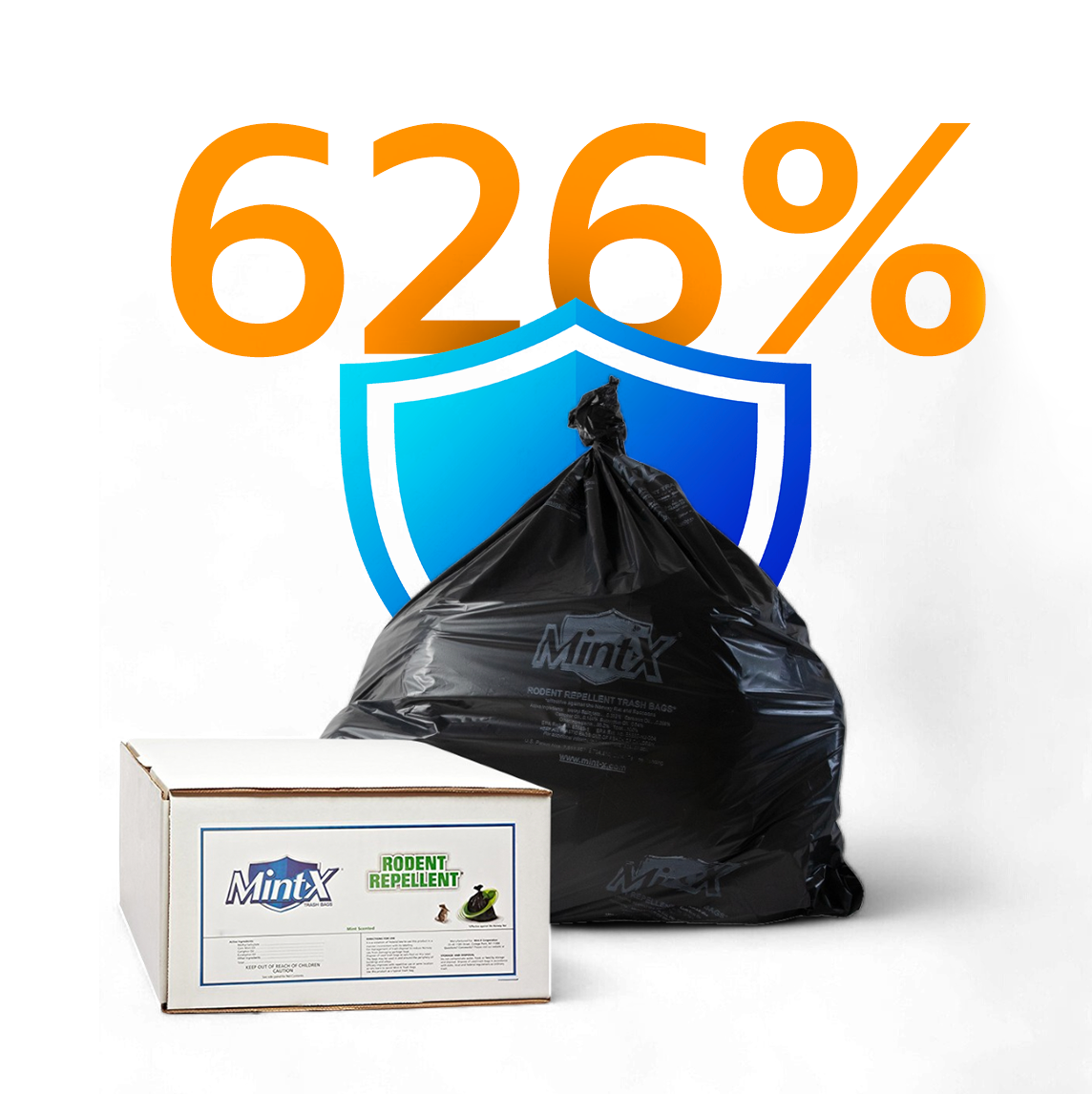
SalesDuo helped Mint-X achieve 626% cumulative Amazon sales growth on Amazon.com over the approved two-year comparison period. The sequence did not begin with more ad spend. It began with catalog consolidation, availability and buyability work, a compliance-sensitive listing recovery, content upgrades, a Seller Central launch, and a later move from FBM to FBA. The result reflects approved SalesDuo account data for this engagement.
Case-study scope
Mint-X is the client, and SalesDuo is the Amazon growth partner. This page explains the account sequence and reported outcomes; it is not a Mint-X product page, a legal compliance guide, or a universal promise of results.
Results at a glance
The case should be viewed as a multi-lever account revamp rather than purely an advertising win. The result table provides an overview of the account situation, the sequence of interventions, and the agreed-upon outcomes.
| Field | Case-study record | Reader context |
|---|---|---|
| Brand and category | Mint-X; rodent-repellent trash bags | Household goods |
| Marketplace | Amazon.com | United States |
| Engagement | Began April 2020; approved two-year comparison period | Vendor Central and Seller Central; FBM to FBA |
| Core challenge | Catalog fragmentation, availability, new-product launch constraints, a pesticide-related attribute block, fulfillment economics, and limited paid visibility | A multi-lever account turnaround |
| Headline result | 626% cumulative Amazon sales growth over two years | Approved SalesDuo account data |
| Supporting results | 290.35% early growth; 86% year-over-year growth in 2021; 2x and 3x post-FBA comparisons; 5% ACoS | Engagement-specific results |
| Primary conversion | Book a 1:1 Growth Call | Proof-led next step |
For broader proof across categories and account types, browse The Amazon growth case studies. This page remains focused on Mint-X’s specific catalog, compliance, fulfillment, and advertising sequence.
The challenge: a premium, regulated product with several growth blockers
Mint-X offers rodent-resistant garbage bags. The products are registered with the EPA and cost about 8 to 10 percent more than regular trash bags. In its April 2020 evaluation, it discovered related limitations in catalog structure, availability, channel setup, content, compliance-sensitive attributes, fulfillment, and promotion.
Similar products were splintered, Vendor Central availability fluctuated, and two new items were not being purchased through the known workflow. A pesticidal attribute requirement led to the removals in July 2020. Raising ad spending when offers were not available or blocked would mean more waste.
This is why SalesDuo treated the engagement as an Amazon Vendor and Seller Central operations problem first and a media-scaling problem later.
The growth plan: fix the operating system before scaling demand
The workflow was simple: Make the catalog buyable, bring back availability, unblock the compliance-sensitive block, enhance conversion assets, pick a better fulfillment model, then scale demand. The sequence is important because Amazon advertising can only build on what the detail page, inventory position, and offer already provide.
| Step | Mint-X intervention | Why it came next |
|---|---|---|
| 1 | Consolidate related products with variations | Improve product discovery and selection within the catalog |
| 2 | Restore availability and launch through Seller Central | Create a workable route to market for products not being purchased through Vendor Central |
| 3 | Resolve the pesticide-related attribute block | Recover listing eligibility using verified product and registration information |
| 4 | Improve detail-page content, images, A+ Content, and the Brand Store | Strengthen the conversion environment before adding demand |
| 5 | Move selected products from FBM to FBA | Evaluate Prime eligibility, service levels, and account-specific fulfillment economics |
| 6 | Add promotions and scale Amazon Ads | Increase visibility after buyability, stock, and content were more stable |
1. Consolidate the catalog with variations
| Dimension | Before | After |
|---|---|---|
| Catalog structure | Related size and color products were fragmented across separate listings. | Eligible options were grouped into parent-child variation families. |
| Shopper path | Customers had to move between separate product pages to compare options. | Customers could compare eligible sizes and colors within one product family. |
| Measurement | The original catalog did not provide a unified family-level view. | The approved ASIN set and related traffic or conversion movement are tracked in the internal record. |
SalesDuo organized the available size and color options in a parent-child variation family on each product detail page so customers could view and compare options under a single product family.
For implementation rules and relationship types, use The Amazon variation strategy guide.
2. Restore availability and launch through Seller Central
Goal: create a buyable route for two new products that Vendor Central was not purchasing.
Strategy: launch the products through Seller Central after the historical Vendor Central Dropship/Born 2 Run workflow had not resolved availability.
Result: Mint-X gained a direct route to market before advertising was scaled.
In June 2020, Amazon was not purchasing two newly created Vendor Central items. SalesDuo recommended a Seller Central launch to create a direct route to buyability after the historical Vendor Central Dropship/Born 2 Run workflow had not resolved availability.
The channel decision was specific to Mint-X's 2020 Vendor Central constraints and should be interpreted in that historical context.
3. Resolve the pesticide-related attribute block
Following the July 2020 attribute block, SalesDuo took Mint-X’s approved product and registration records, filled the requisite Amazon fields, and resubmitted the corrected data for review. The listings in question were reinstated once Amazon accepted the backed-up information. This procedure has been tailored specifically for the Mint-X file and should not be used as a one-size-fits-all solution or interpreted as any sort of compliance or legal advice.
Removing a required pesticide attribute in July 2020 took down the Mint-X listings, which were brought back once verified EPA data was provided. This is a compliance-sensitive restoration and just as distinctive within the case study. Among SalesDuo leverages Mint-X's approved product and registration records to fill in the required Amazon attribute. The method was specific to the listings and does not constitute legal advice.
EPA guidance on pesticide-treated products shows why classifications cannot be generalized; the agency’s pesticide product search tools can confirm public records. This page does not provide legal advice or suggest a universal remedy.
4. Improve listings, images, A+ Content, and the Brand Store
Before: inconsistent representation of product families and explanation at the level (title, bullet, description, images, storefront information). After: Harmonized detail page copy and enhanced images, A+ content, and a fully built Brand Store resulted in a more uniform conversion experience.
SalesDuo had the titles, descriptions, bullet points, and detail-page images updated, as well as the A+ content, and the Brand Store was finalized in October 2020. These changes allowed for better product clarity and brand consistency after the catalog and availability work.
Amazon sales grew 290.35% in the established early-account comparison period. The figure is based on combining catalog and availability information with the content sequence, not on the content modifications alone.
For module and design guidance, use the Amazon A+ Content guide.
5. Move from FBM to FBA
| Input | FBM | FBA | Decision impact |
|---|---|---|---|
| Per-unit fulfillment cost | $4.44 | $3.78 | Compare like-for-like units. |
| Storage and inbound | $0.80 | $0.66 | Include seasonality and aged inventory. |
| Merchant labor and carrier cost | $1.25 | $1.25 + Flexible carrier costs | Quantify operational savings or added cost. |
SalesDuo suggested FBA in January 2022, and Mint-X made its first shipment in February 2022. Sales reached 2x the FBM comparable level after two months and 3x after 4 months, with 5-10% promotions. There were changes in stock, price, season, and advertising as well, so this is the result of watching the sequence, not a one-cause assertion.
Amazon’s FBA documentation confirms that FBA handles storage, order fulfillment, customer service, and returns, and can make eligible offers available with Prime delivery. However, Seller Fulfilled Prime remains active for sellers that prequalify, pass a trial, and maintain performance. Prime is not exclusive to FBA.
For Mint-X, the service level commitment decision was assessed by contribution margin and service reliability in terms of product size and weight, storage costs, inbound shipping, returns, labor, carrier costs, and inventory risk.
For the broader comparison, review the FBA vs. FBM fulfillment decision guide.
6. Scale visibility with Amazon Ads and promotions
Goal: to grow awareness once availability, content, and fulfillment were stable.
Strategy: ramp up the Amazon Ads budget, control competitive generic terms, optimize delivery by hour, and couple media with 5–10% promotions.
Result: the account reached an ACoS of 5% within the agreed measurement period.
Advertising was in the third position. SalesDuo scaled up the Amazon Ads budget, managed competitive generic terms, and optimized delivery by hour. The account realized a 5% ACoS over the approved measurement period; this specific engagement result is not an industry benchmark.
The current term is Amazon Ads. Amazon’s Sponsored Products best-practices guide notes that advertised items must be in stock, reinforcing the sequence. The current case is evident for budget expansion, competitive generic-term management, and hour optimization; the approved account record will be able to provide exact ad products and target mix as shown in the final case study.
ACoS equals ad spend divided by ad-attributed sales. Amazon’s ACoS guide explains that the metric depends on goals and economics; 5% is not a universal target. See how to evaluate and lower Amazon ACoS and manage Amazon bid management and dayparting.
The Amazon advertising management service page owns a broader campaign strategy.
What changed, when, and what the data can support
The timeline reflects catalog, availability, compliance, creative, fulfillment, promotions, inventory, pricing, and advertising during overlapping intervals. Separate each of dated facts, observed results, attributed metrics, and interpretation in the approved case record rather than lumping all growth into one lever.
| Timing | Documented event | Reader context |
|---|---|---|
| April 2020 | SalesDuo onboarding and account review | The engagement began with account and catalog diagnosis. |
| June 2020 | Seller Central route proposed for two new products | The channel shift restored a route to buyability. |
| July 2020 | Pesticide-related attribute block and reinstatement | Listings recovered after verified information was accepted. |
| October 2020 | Brand Store completed | Creative and storefront work followed catalog and availability work. |
| Full year 2021 | 86% growth versus 2020 | Full-year Amazon sales comparison. |
| January–February 2022 | FBA recommendation and first shipment | The fulfillment shift followed the earlier operating fixes. |
| Next 2–4 months | 2x and 3x sales comparisons with promotions | Observed after the FBA shipment while promotions and advertising also changed. |
| Two-year period | 626% cumulative Amazon sales growth | Overall approved account result. |
An increase of 626% means the final value is 7.26 times the base value. Increasing from $100,000 to $726,000 is a mathematical example, not a Mint-X baseline.
SalesDuo documented the source, formula, period, marketplace, exclusions, rounding, and approver for each metric in the case-study measurement log. This evidence-based approach follows FTC advertising guidance.
Why the strategy worked for Mint-X
The best explanation is that each intervention was lifting a different constraint. Variations improved presentation; channel work restored buyability; compliance coordination reinstated listings; content clarified the offer; FBA altered fulfillment; and promotions and ads brought demand to a more stable base.
The order was also a function of demand, inventory, viable economics, and operational capabilities. The record does support a contribution-based interpretation of the strategy, and it does not hold out the same for every Brand.
When this playbook may and may not fit another brand
This approach fits accounts with interacting constraints. It is a poor substitute for product demand, viable margins, or substantiated regulated claims.
Good fit signals:
- Products are unavailable, suppressed, unbuyable, or catalog-fragmented.
- Ads are scaling before content, inventory, or fulfillment is stable.
- Channel and fulfillment decisions lack contribution-margin analysis.
- A regulated workflow requires coordinated documentation and approval.
Poor fit signals:
- The product lacks demand, differentiation, or value.
- The business cannot fund inventory or transition costs.
- Claims lack label, registration, or advertising evidence.
- The brand expects FBA or ads to guarantee growth.
Grow your Amazon account with a sequenced plan
The result shows the value of sequencing catalog, compliance, conversion, fulfillment, and advertising work around the account's highest-leverage constraints.
SalesDuo can review the full operating system behind your Amazon account and identify the highest-leverage sequence.
Frequently Asked Questions
What did SalesDuo change for Mint-X on Amazon?
SalesDuo sequenced catalog variations, availability recovery, a Seller Central launch, compliance remediation, content and Brand Store upgrades, FBA, promotions, and Amazon Ads.
How was the 626% growth calculated?
The 626% figure represents cumulative Amazon sales growth over the approved two-year comparison period beginning in April 2020. It is calculated as ((ending-period sales - baseline-period sales) / baseline-period sales) x 100, so the ending value was 7.26 times the baseline.
How quickly did Mint-X grow after moving to FBA?
Mint-X sales reached 2x the FBM benchmark level by the second month of the first FBA shipment and 3x by the fourth. Promotions, stock, pricing, seasonality, and advertising all varied over that time period, so interpret the result as a sequence to observe, not as a single-lesion assertion.
Did FBA cause the growth?
Growth followed the FBA shipment, but promotions and advertising changed too. FBA could have added through service and Prime eligibility; causal attribution would require like-for-like analysis.
What happened when Amazon blocked the pesticide-related listings?
In July 2020, an attribute requirement related to pesticides led to the removal of the listings. SalesDuo filled in the mandatory fields with Mint-X’s confirmed EPA data, and the listings were reinstated. This narrative is intended only for the Mint-X situation and is not a substitute for professional legal counsel.
What Amazon Ads strategy did SalesDuo use?
SalesDuo tripled budget, competed aggressively on selective comparable generic keywords, and optimized delivery by hour. The final case study should also list the sanctioned ad products, targeting mix, spend, attribution window, and the branded/non-branded split as per the internal account record.
Is 5% ACoS a good target for every brand?
No. Judge ACoS in the context of margin, growth objectives, brand demand, product vintage, stock, and whole economics. A low ACoS can also be a symptom of a product with limited demand, or constrained scale.
Should every brand move from FBM to FBA?
No. Contrast dimensions, weight, fees, storage, inbound, labor, delivery, returns, inventory risk, eligibility, and margin. FBM, or even a hybrid option, might work better.
Can SalesDuo support regulated products?
SalesDuo can manage catalog, documents, operations, advertising, and review. This is not legal advice or a promise of approval, registration, reinstatement, or compliance.
Will another brand get the same result?
No result is guaranteed. Mint-X’s outcome depended on product, account history, inventory, pricing, competition, creative, fulfillment, promotions, and execution. Another brand needs its own diagnostic and economics.