How to Use Amazon Seller Central FBA Small and Light Program to Increase Profitability
If you are still searching for the Amazon FBA Small and Light program in 2026, here is an important update: the program no longer exists in the US.
Amazon discontinued Small and Light as of August 29, 2023, replacing it with Low-Price FBA rates. Qualifying products under $10 are automatically routed to the lower rates, delivered with standard FBA delivery speeds, and there is no need to enroll separately.
So the question is no longer, “How do I enroll in Small and Light?”
The more useful question is, “Does this SKU still make enough money after fulfillment fees, referral fees, advertising, storage, returns, and product costs?”
What Was Amazon’s FBA Small and Light Program?
Amazon Small and Light was built for inexpensive, compact products where standard FBA fees could take too much out of the selling price.
Sellers could enroll eligible products and pay lower fulfillment fees. The trade-off was slower delivery than regular FBA, along with specific requirements around price, size, weight, and enrollment.
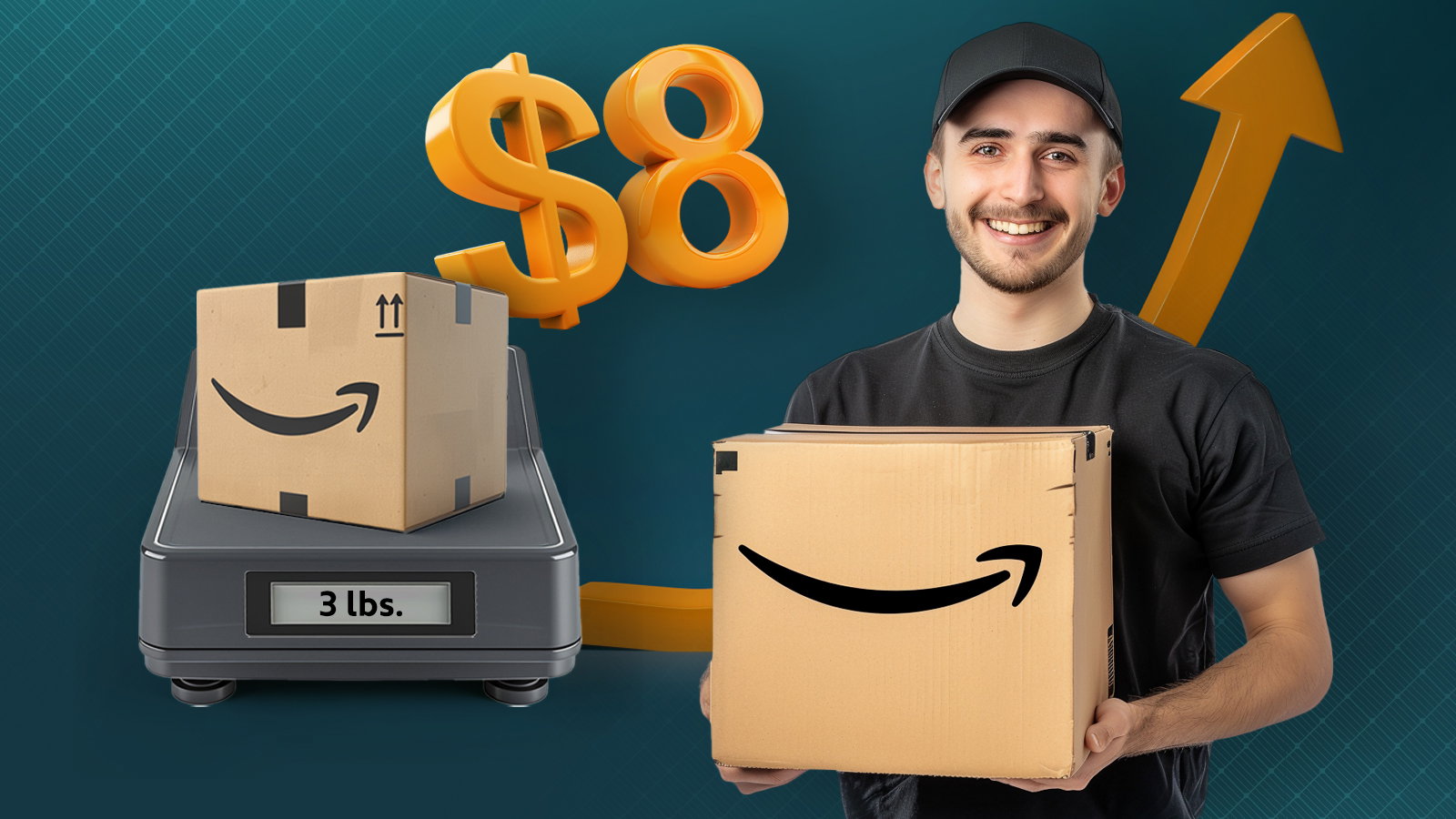
At the end of the program, eligible products had to be priced at $12-or-less, measure no more than 18 × 14 × 8 inches, and weigh no more than 3 lb.
Those rules are now historical.
Older Small and Light eligibility charts and enrollment instructions still appear in search results, which can be confusing. They may help you understand how the old program worked, but you should not use them for current pricing or fulfillment decisions.
If you need a broader refresher on how Amazon fulfillment works today, SalesDuo’s guide to Fulfillment by Amazon covers the wider FBA model.
Why Amazon Ended Small and Light (and When)
Amazon announced the transition on June 29, 2023. Enrollment of new products ended after July 17, and the US Small and Light program officially ended on August 29, 2023.
Amazon’s reasoning was fairly simple.
Lower fulfillment fees had helped sellers offer more low-priced products, but customers still expected fast delivery. Instead of keeping a separate program with slower shipping, Amazon moved to a model that gave qualifying low-priced items reduced fulfillment rates within standard FBA.
That change did two things at once: it removed the need for a separate enrollment process and improved the delivery experience compared with the old Small and Light model.
What Replaced Amazon Small and Light? Low-Price FBA Rates Explained
Low-Price FBA rates are Amazon’s current reduced fulfillment rates for qualifying low-priced products.
The biggest difference is that the process is automatic.
With Small and Light, sellers had to check whether a product qualified and then enroll it. Under Low-Price FBA, Amazon’s published guidance says eligible products priced under $10 automatically receive the lower rate.
There is no separate Small and Light enrollment workflow.
Low-Price FBA products also use standard FBA delivery speeds, so sellers no longer make the same lower-fee-versus-slower-shipping trade-off that existed under Small and Light.
Sellers still need to pay close attention to the wider FBA fee structure, though.
Amazon says US FBA fees increased by an average of $0.08 per unit sold in 2026, although the actual change depends on the product and fee tier.
2026 Low-Price FBA Rate Card
Amazon’s current 2026 Low-Price FBA rate card lists the following Low-Price FBA fulfillment fees for non-apparel small-standard products.
| Shipping weightFulfillment fee | |
|---|---|
| 2 oz or less | $2.43 |
| 2+ to 4 oz | $2.49 |
| 4+ to 6 oz | $2.56 |
| 6+ to 8 oz | $2.66 |
| 8+ to 10 oz | $2.77 |
| 10+ to 12 oz | $2.82 |
| 12+ to 14 oz | $2.92 |
| 14+ to 16 oz | $2.95 |
For 2026, Amazon says Low-Price FBA rates average $0.86 less per unit than standard FBA rates, although the exact difference depends on size and shipping weight.
Larger standard-size products move into higher weight-based tiers, so the right rate depends on the ASIN’s size and shipping weight. Always check Amazon’s live fee table or Revenue Calculator before relying on a rate in your forecast.
Another 2026 cost to include is Amazon's fuel and logistics-related surcharge.
Starting April 17, 2026, Amazon added a 3.5% fuel and logistics-related surcharge to FBA fulfillment fees in the US and Canada. The surcharge is based on the fulfillment fee, not the selling price. Amazon estimates that the average impact across US FBA is about $0.17 per unit, although the exact amount varies by product.
From July 1, 2026, Amazon also added a $0.38 per-unit flat fee surcharge to FBA items priced below $15. This fee is cumulative for products under $10 with Low-Price FBA fulfillment charges and a 3.5% surcharge for fuel and logistics.
For a wider view of the costs involved, see SalesDuo’s Amazon selling fees guide.
Small and Light vs. Low-Price FBA Rates
| FactorFBA Small and LightLow-Price FBA | ||
|---|---|---|
| Status | Discontinued | Current |
| Enrollment | Separate enrollment required | Automatic for eligible products |
| Price model | Historical program criteria | Under $10 under current guidance |
| Delivery | Slower than standard FBA | Standard FBA delivery speeds |
| Fee structure | Separate Small and Light rates | Low-Price FBA rate card |
| Seller task | Check eligibility and enroll | Monitor price, fees, and margin |
| Main decision | Whether to enroll | Whether the SKU is still profitable |
| Transition fee impact | Lower legacy Small and Light rates | At the 2023 transition, formerly enrolled sub-$10 items paid about $0.30 more per unit, while eligible items not previously enrolled saved about $0.77 per unit on average. |
The biggest shift is not just operational. It changes how sellers should think about the program.
Small and Light was mainly an enrollment decision. Low-Price FBA is much more of a unit-economics decision.
The $10 Threshold: Why Pricing Needs Margin Math
The under-$10 rule creates an obvious pricing question.
Should you keep a product at $9.99 to stay within Low-Price FBA, or raise the price and accept standard FBA rates?
Amazon’s current guidance says products priced under $10 can receive Low-Price FBA rates, while products above that threshold move into standard FBA pricing.
But the lower fulfillment fee shouldn't decide the price by itself.
Imagine a product currently sells for $9.99. Moving it to $10.49 may increase the fulfillment fee, but you also gain another $0.50 in revenue. If that extra revenue is greater than the fee increase and conversion does not fall sharply, the higher price may actually leave more profit.
The better calculation is:
Selling price
− referral fee
− fulfillment fee
− surcharge
− COGS
− inbound and prep
− storage
− PPC
− returns
= contribution margin
SalesDuo’s Amazon Revenue Calculator guide can help you compare both scenarios before changing the price.
Amazon also recommends tools such as the Revenue Calculator and Fee and Economics Preview to review the impact of current fees.
Do Sub-$10 Products Still Make Sense on Amazon in 2026?
They can, but there is much less room for inefficient costs.
Take a simple example.
Assume a $7.99 non-apparel product weighing 2 oz or less. Amazon’s current Low-Price FBA table lists a $2.43 fulfillment fee for that tier.
The 3.5% fuel and logistics surcharge would add about $0.09 to that fulfillment fee.
Now assume, only for illustration, a 15% referral fee and the following costs:
| Margin itemIllustrative amount | |
|---|---|
| Selling price | $7.99 |
| Referral fee | -$1.20 |
| Low-Price FBA fee | -$2.43 |
| 3.5% surcharge | -$0.09 |
| Low-price FBA surcharge | -$0.38 |
| COGS | -$1.00 |
| Inbound and prep | -$0.20 |
| Storage allowance | -$0.10 |
| PPC per order | -$0.70 |
| Return allowance | -$0.10 |
| Contribution margin | $2.17 |
That leaves an illustrative contribution margin of about $2.17, or roughly 27% of the selling price, before overhead.
This is just an example, not the Amazon fees format for all products. Model the SKU at its current price and at just over $10. Compare that contribution margin with fees, costs, storage, returns, and volume. Remember, a higher per-order margin can still result in lower profit if volume drops.
Selling via the Low-Price FBA route is generally more viable when the product has a low landed cost, small size, quick sell-through, effective PPC, and low returns. Replenishable items are also a good match for this arrangement, particularly when customers make repeat purchases or Subscribe & Save boosts customer lifetime value.
The model becomes harder when products sit in storage, require heavy advertising, have high return rates, or carry weak gross margin before Amazon fees.
If fulfillment costs are the main issue, review these strategies to reduce Amazon FBA fees before making a bigger pricing or fulfillment change.
Alternatives When Low-Price FBA Does Not Work
If the economics do not work below $10, holding down the price solely to qualify for Low-Price FBA may be the wrong decision.
Raise the price and rerun the model. Even if fulfillment costs rise, the higher selling price may produce more contribution margin.
Try multipacks or bundles. Where customer demand and Amazon’s catalog rules allow, a higher order value may yield better economics than focusing on a single low-priced unit.
Compare FBA and FBM. Some low-margin products may work better with merchant fulfillment, depending on shipping costs, operational capacity, delivery speed, and customer expectations. SalesDuo’s FBA vs. FBM guide breaks down those trade-offs.
Cut weak SKUs when necessary. A product can generate decent sales and still be a poor business decision if advertising, storage, fulfillment, and returns leave very little contribution.
Final Takeaway
The Amazon FBA Small and Light program is no longer available. For sellers in 2026, the relevant question is whether Low-Price FBA leaves sufficient contribution margin on each SKU.
Review the current fee tier, add the 3.5% surcharge, and factor in advertising, storage, returns, and product costs before deciding whether to stay under $10. A reduced fulfillment fee makes sense only if the overall economics still make sense.
For brands managing these decisions across a larger catalog, SalesDuo’s Amazon account management services can help connect pricing, fees, advertising, inventory, and catalog strategy.
If you want to identify which SKUs need attention first, book a 1:1 Growth Call.
Frequently Asked Questions about Amazon FBA Small and Light
1. Is Amazon Small and Light still available?
No. Amazon ended the US FBA Small and Light program on August 29, 2023.
2. What replaced Amazon Small and Light?
Amazon replaced it with Low-Price FBA rates for eligible low-priced FBA products.
3. Do I need to enroll in Low-Price FBA?
No separate enrollment is required. Amazon says qualifying products priced under $10 automatically receive Low-Price FBA rates.
4. What is the Low-Price FBA price threshold in 2026?
Amazon’s current public guidance says Low-Price FBA applies to products priced under $10. Check Seller Central before repricing because Amazon can update fee rules.
5. Are Low-Price FBA products eligible for Prime?
Yes. They use standard FBA delivery speeds rather than the slower fulfillment associated with Small and Light.
6. How much do Low-Price FBA rates save vs. standard FBA?
Amazon says 2026 Low-Price FBA rates average $0.86 less per unit than standard FBA rates. The exact savings for an ASIN still depend on its size, shipping weight, and applicable standard FBA tier, so confirm them in the current rate card or Revenue Calculator.
About the Author
With a wealth of experience in Amazon account management, Maaz Javeed Mohammed excels in refining sales strategies and amplifying brand presence. Committed to achieving impactful outcomes, he blends deep industry insights with a fervent drive for e-commerce triumph. Beyond work, Maaz enjoys hiking, capturing moments through photography, and reveling in music.