
How to Handle Negative Reviews on Amazon

To handle negative reviews on Amazon in 2026, first understand what type of feedback you are dealing with. Amazon product reviews and seller feedback follow different rules.
Sellers cannot post a public reply under a product review. Amazon’s current Brand Customer Reviews guidance also says Brand Representatives cannot contact a customer just because they left a critical review.
Instead, sellers should look into the complaint, find the real cause, fix the problem, and report a review only when it breaks Amazon’s rules. If the customer contacts you first through an allowed Amazon channel, you can respond and help solve the issue.
Good review management is not about arguing with one unhappy customer. It is about improving the customer experience across your entire catalog.
In this guide, we’ll explain how Amazon negative reviews can affect your business, why customers leave them, what sellers can and cannot do, how to respond through approved channels, how to prevent repeated complaints, and how to use customer feedback to improve your products and operations.
The Negative Reviews Impact on Amazon Sellers
Negative reviews can make shoppers less confident about buying a product. They may also lower sales, increase returns, and weaken the listing’s overall results.
The effect can be even bigger when several customers mention the same problem, such as poor product quality, incorrect sizing, missing parts, images that do not match the product, or items arriving damaged.
Effects on Sales and Conversion Rates
Reviews strongly influence buying decisions.
In PowerReviews’ 2023 consumer research, 98% of shoppers said reviews are an important source of information when deciding what to buy. PowerReviews also found that almost all online shoppers read reviews at least sometimes.
The well-known Spiegel Research Center study also shows how much reviews can affect conversion.
The study found that showing reviews increased conversion by 190% for a lower-priced product and by 380% for a higher-priced product.
This does not mean that one positive review will increase sales by 190% or 380%. The study compared products with reviews against products without reviews.
Spiegel Research Center also explains that the impact can change based on the product rating, review content, product price, and other factors.
Negative reviews can have the opposite effect. They may give shoppers a reason to delay or cancel a purchase.
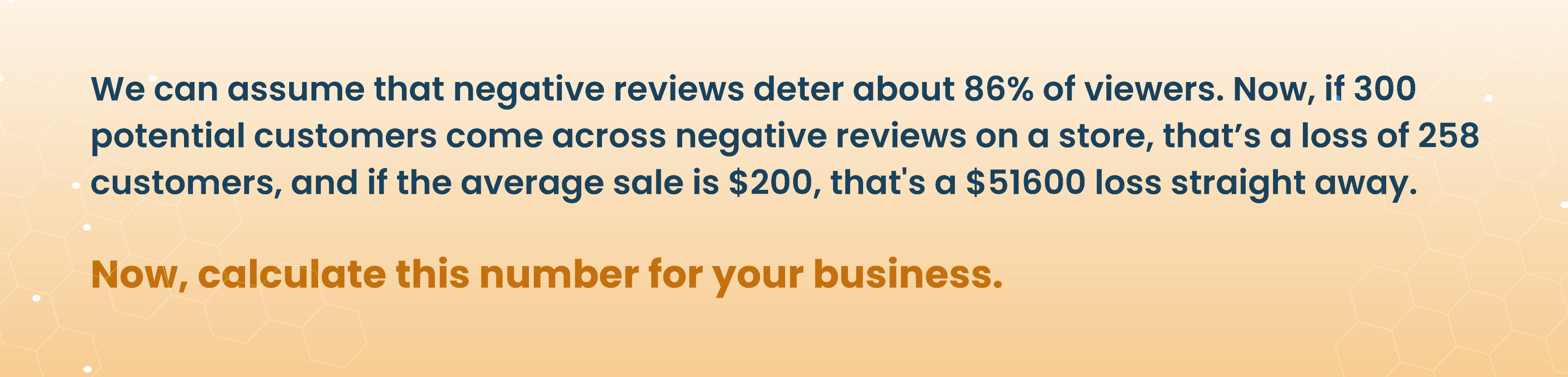
A consumer-review benchmark summarized by the OECD found that 86% of people would hesitate to buy from a business with negative online reviews.
The $51,600 example used on this page should be treated only as an example, not an industry average.
For example, if 300 shoppers reach a listing each year, 86% decide not to buy because of negative reviews, and the average order value is $200, the possible revenue at risk would be $51,600.
Your actual loss may be very different. It depends on your traffic, conversion rate, product price, type of complaint, category, and how quickly you solve the problem.
Influence on Product Visibility and Rankings
Amazon does not publish a simple rule saying that one one-star review will reduce a product’s ranking by a certain number of positions.
It is better to think about reviews as one part of the product’s overall performance.
A lower rating or repeated complaints can reduce customer trust. Lower trust can lead to fewer purchases, lower conversion, and weaker sales performance.
Instead of guessing how reviews affect an unpublished ranking formula, focus on fixing the customer problem behind the negative feedback.
Common Causes of Negative Reviews on Amazon
Most bad Amazon reviews happen because what the customer expected differs from what they actually received.
This usually comes from one of three areas: the product, the listing, or fulfillment.
Product Quality Issues

Common product-related complaints include:
- Defective or broken products
- Weak or inconsistent materials
- Size or fit problems
- Performance issues with electronics or appliances
- Missing parts or accessories
- Used, damaged, or wrongly packed products
- Authenticity, ingredient, or safety concerns in sensitive categories
If the same complaint keeps coming up, don't treat each review as a separate issue.
Check whether the problem is connected to one ASIN, one variation, one production batch, one supplier, or the overall product design.
Misleading Product Descriptions
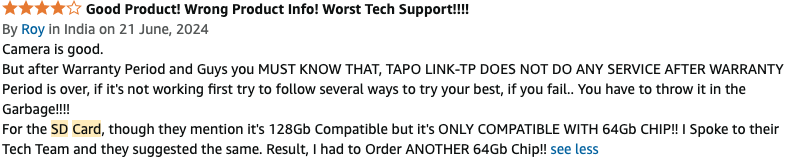
A customer can leave a negative review even when the product works correctly.
Sometimes the problem is that the listing created the wrong expectation.
Common problems include:
- Images that make the product size, color, finish, or quantity look different from reality
- Claims that the product cannot always deliver
- Missing compatibility details
- Unclear sizing information
- Important limitations hidden deep in the listing
- Bundles or included parts that are not explained clearly
The answer is not simply to write better marketing copy.
The listing should help customers understand exactly what they are buying. It should also help them know when the product may not be right for them.
Shipping and Fulfillment Problems
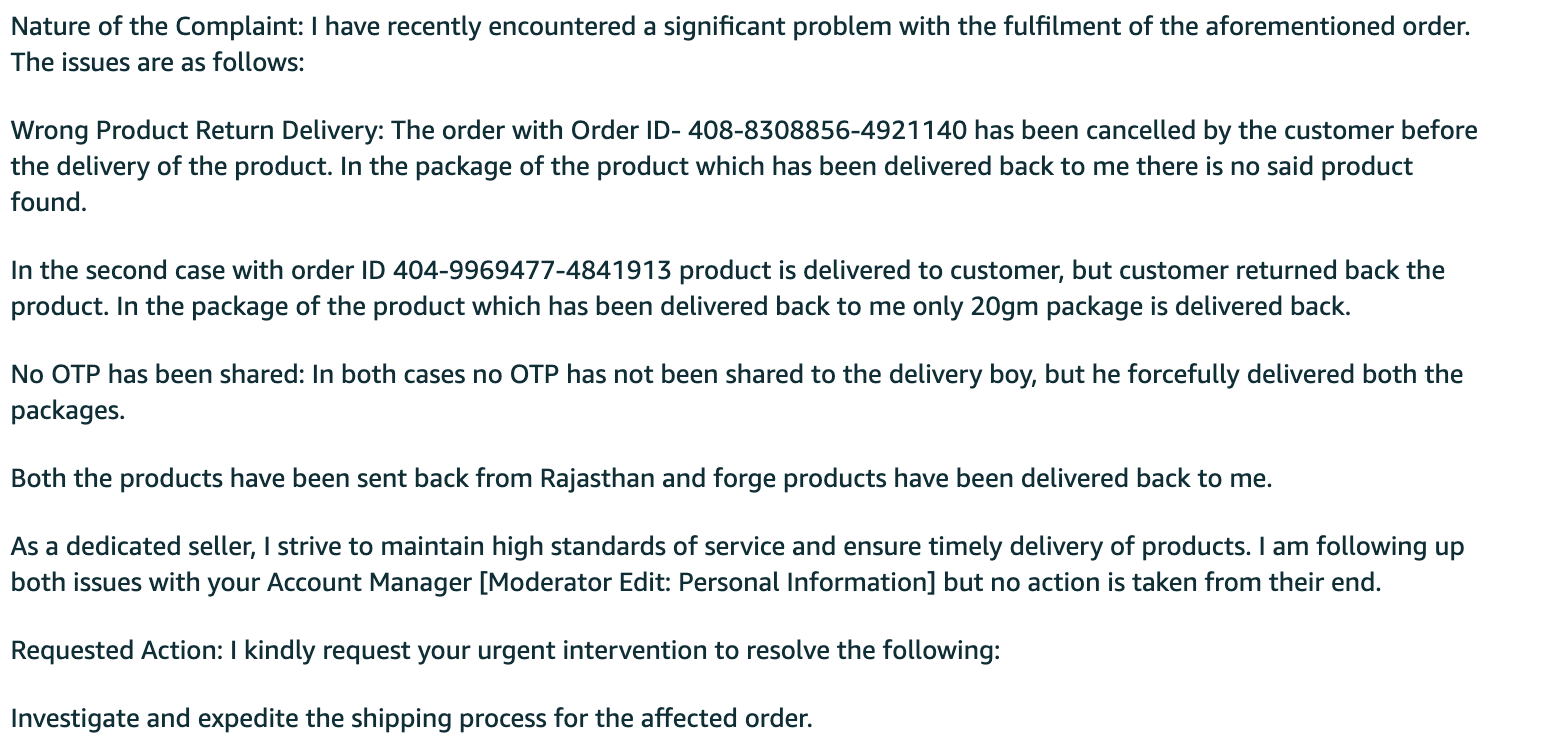
Late delivery, damaged packaging, wrong items, missing units, and poor handling can also lead to bad ratings.
Sometimes customers may complain about shipping or fulfillment in a product review even when the product itself is fine.
That is why sellers should separate product problems from fulfillment problems when reviewing customer complaints.
For FBA, look for patterns involving packaging, inventory, or fulfillment that you can document and escalate.
For FBM, review carrier performance, handling time, packing accuracy, tracking, and customer communication.
How to Respond to Negative Reviews on Amazon
The most important rule in 2026 is that a product review is not the same as a review platform where a company can publicly reply under every comment.
Amazon no longer provides a public seller-reply option for product reviews.
Its current Customer Reviews help page also says Brand Representatives cannot contact customers only because they left a critical review, unless the customer first contacts the seller.
So, the right action depends on the type of feedback.
Product Reviews vs. Seller Feedback: Know Which One You Have
| Feedback type | What you should do | What you should avoid |
|---|---|---|
| Genuine product review | Study the complaint, fix the real cause, and respond only through an approved Amazon conversation if the customer contacts you first | Do not try to post a public product-review reply or contact the customer only because of the review |
| Seller feedback | Solve the order issue and, where Amazon allows it, post a professional response through Feedback Manager | Do not pressure or reward the customer to remove or change the feedback |
| Policy-violating review | Report the review through Amazon and clearly explain why it may break policy | Do not report a review only because it is negative |
| Suspected fake or manipulated review | Save evidence, report the review, and escalate a wider pattern through the correct Amazon channel | Do not accuse a competitor without proof or organize mass reporting |
Amazon’s seller-feedback rules are different from its product-review rules.
If the complaint is about the seller, delivery, customer service, or an order transaction, review our guide to managing seller feedback so you do not mix the two processes.
Provide Timely and Professional Responses
Speed still matters when a customer contacts you through an approved Amazon channel.
A fast response does not mean you should accept blame before checking what happened.
It means acknowledging the problem, reviewing the facts, and telling the customer what happens next.
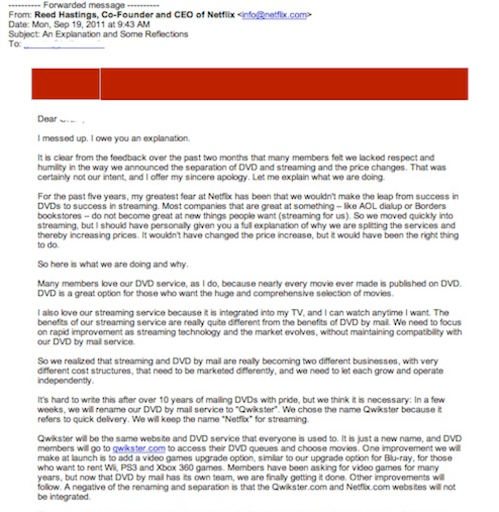
The Netflix pricing backlash is a useful example of good communication.
In 2011, Reed Hastings publicly apologized after Netflix faced heavy criticism over pricing and service changes.
The lesson for Amazon sellers isn't to publicly reply to product reviews, because Amazon doesn't allow that.
The lesson is to recognize a real problem, avoid becoming defensive, and explain the solution clearly.
A simple response structure is:
- Acknowledge the exact issue
- Apologize for the customer’s experience when appropriate
- Explain only the information that helps the customer
- Offer a practical solution through the approved Amazon conversation
For example:
“We sincerely apologize for the inconvenience caused by [issue]. We value your feedback and are working to ensure this doesn’t happen again.”
Address Customer Concerns
A good response should do more than say sorry.
It should tell the customer what you can do next.
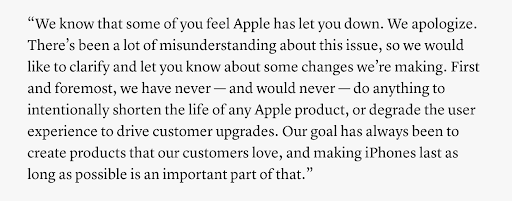
Apple’s response to the iPhone battery-performance issue is a good example.
Apple acknowledged customer concerns and offered a lower-priced battery replacement program.
For Amazon sellers, the same principle applies when communicating with customers through an Amazon-permitted channel.
If the product is broken, incomplete, or not working properly, focus on solving the problem instead of arguing about the review.
A simple process is:
- Confirm the customer’s actual problem.
- Check the order, ASIN, variation, and fulfillment details.
- Offer the correct refund, replacement, troubleshooting step, or support option.
- Record the issue so you can track whether it happens again.
A short response can look like this:
“We appreciate your feedback and sincerely apologize for the inconvenience. We have reviewed the issue and can help with [replacement/refund/troubleshooting step]. Please reply in this Amazon message thread so we can complete the next step.”
Never make a refund, replacement, or other solution dependent on the customer changing, deleting, or improving a review.
Request Review Removal
Amazon does not remove a negative review simply because it hurts your sales or lowers your star rating. Reviews may be removed when they violate Amazon's policies or for other reasons determined by Amazon.
Amazon is more likely to remove a review if it breaks its review or Community Guidelines.
This can include promotional content, conflicts of interest, abusive content, spam, or other prohibited material.
If one review appears to break Amazon’s rules:
- Open the product detail page and find the review.
- Use the Report or Report abuse option for that review.
- Save screenshots, the review URL, ASIN, date, and a short explanation of the possible violation in case you need to escalate the issue later.
If the activity looks suspicious, coordinated, or connected to review manipulation, follow our separate guide on how to report fake or manipulated reviews.
That page explains the fake-review process in more detail. This guide focuses on handling genuine negative feedback and seller responses.
If you are looking for outside help with monitoring, escalation, or reputation management, our guide to Amazon review management agencies explains the different service options.
No legitimate service provider can guarantee that Amazon will remove a genuine review that follows Amazon’s policies.
Negative Review Response Templates (Copy & Customize)
These templates are meant for approved customer-service conversations.
For example, you can use them when a customer contacts you first through Amazon messaging, or when Amazon allows you to respond to seller feedback.
These are not templates for replying publicly under product reviews because Amazon does not provide a public seller-reply option for product reviews.
Change the issue, product, and solution based on the customer’s situation. Keep your message short and clear.
Scenario 1: Product Quality or Defect Complaint
Template: “Thank you for telling us about the issue with [product/feature]. We’re sorry it did not perform as expected. We are reviewing what happened and can help with the appropriate replacement, refund, or troubleshooting option. Please reply in this Amazon message thread with the details Amazon allows us to request so we can resolve it.”
Scenario 2: Shipping or Delivery Problem
Template: “We’re sorry your order arrived [late/damaged/incorrect]. We understand how frustrating that is. We have checked the order details and can help with the next available resolution. Please reply to this Amazon message so we can complete the process.”
Scenario 3: Sizing, Fit, or Description Mismatch
Template: “Thank you for pointing out the mismatch between what you expected and what you received. We’re sorry the sizing or product information was not clear enough. We are reviewing the listing details and can help with the available return, replacement, or support option for your order.”
Scenario 4: Missing Parts or Incomplete Order
Template: “We’re sorry your order arrived without [missing part]. That is not the experience we want customers to have. We are checking whether the issue came from packing, inventory, or fulfillment and can help with the appropriate replacement or refund path. Please continue through this Amazon message thread.”
Scenario 5: Genuine Misunderstanding or User Error
Template: “Thanks for sharing what happened. Based on your description, [feature] may work differently than expected. The quickest step is [simple troubleshooting or usage step]. If that does not solve it, reply here, and we’ll help with the next available option.”
Scenario 6: Escalation to a Resolution
Template: “We’re sorry this issue has not been resolved yet. We have reviewed the case and are ready to move to the next step. Depending on the order and eligibility, that may include a replacement, refund, or additional support. Please reply in this Amazon conversation so we can complete the resolution.”
Compliance reminder: Do not ask a customer to change or remove a review. Do not offer money, discounts, or other rewards in exchange for review activity. Also, do not move the conversation outside Amazon when Amazon’s communication rules require you to stay on the platform. Amazon treats review manipulation seriously.
Proactive Tactics to Prevent Negative Reviews
You cannot stop every negative review.
But you can reduce many avoidable complaints by fixing product, listing, and fulfillment problems before they affect more customers.
Ensure Product Quality and Consistency
The best way to prevent negative reviews is to find quality problems before the product reaches Amazon customers.
Create simple quality checks around the problems customers are most likely to notice.
For example:
- Approve product samples against written specifications before full production
- Set acceptable limits for size, color, material, performance, and included parts
- Inspect products during important production stages instead of checking only at the end
- Track defects by supplier, batch, ASIN, and variation
- Create a corrective and preventive action process when the same issue keeps happening
Do not use a random defect target, such as 2%, unless it makes sense for your product, category, safety level, and quality requirements.
Craft Accurate and Detailed Product Listings
A good listing helps the right customer buy the right product.
It should explain important limits just as clearly as it explains the benefits.
Make sure the listing clearly covers:
- Product dimensions, materials, quantity, and included parts
- Fit and sizing information
- Compatibility requirements
- Important use limits
- What the product can and cannot do
- Accurate product images from useful angles
- Assembly, setup, or care instructions customers need before buying
If reviews repeatedly say things like “smaller than expected,” “wrong color,” “doesn’t fit,” or “missing part,” compare those complaints with the title, bullets, images, A+ Content, variation labels, and packaging.
Fix the gap between what customers expect and what they actually receive.
Optimize Shipping and Fulfillment Processes
Review fulfillment problems separately from product problems.
For example, a damaged item may need stronger packaging instead of a product redesign.
A late shipment may be caused by the carrier or handling time, not the listing.
Review:
- Packaging strength and internal protection
- Label and barcode accuracy
- Pick-and-pack checks
- Inventory location and variation accuracy
- Handling time for FBM orders
- Carrier and delivery performance
- Repeated damage or wrong-item problems with FBA orders
Pick FBA, FBM, or a combination of both based on what fits your business and fulfillment needs best.
Don't assume one fulfillment method will automatically prevent negative reviews.
Monitor Reviews, Returns, and Complaint Patterns
One complaint may be an isolated issue.
Several similar complaints usually point to a bigger problem.
Create a simple tracking sheet or issue log that includes:
- ASIN
- Variation
- Review date
- Star rating
- Complaint category
- Return reason
- Possible root cause
- Person responsible
- Action taken
For larger product catalogs, review management tools can help organize review monitoring and spot trends across many products.
Also look at when the problem started.
A supplier change, packaging update, variation merge, new fulfillment setup, or listing change may explain why a product that previously performed well suddenly starts receiving similar complaints.
Build Review Volume the Compliant Way
A healthy review profile should come from real customer experiences.
It should not come from pressure, rewards, or incentives.
Use Amazon-approved review request methods and keep every review request neutral.
If you need help with the review-acquisition side, read our guide on how to get more positive reviews.
The goal is to collect more genuine customer feedback while following Amazon’s review policies.
Leveraging Negative Feedback for Business Improvement
Negative feedback can become useful when you turn it into a clear improvement process.
Instead of treating every one-star review as a separate emergency, group similar complaints together, find the root cause, assign someone to fix it, and track whether the problem improves.
Analyzing Feedback for Product Development
A simple four-step process can help.
- Gather the evidence. Review Amazon product reviews, seller feedback, return reasons, customer-service messages, warranty claims, and other useful customer feedback.
- Tag the issue. Use clear categories such as quality, fit, compatibility, packaging, missing parts, delivery, instructions, or listing mismatch.
- Find the pattern. Check which problems appear most often, which ASINs or variations are affected, and whether the issue started after a specific change.
- Create an action plan. Assign the problem to the right product, operations, catalog, or fulfillment owner. Decide what needs to change and how you will measure the result.
Dell gives a useful example of this wider Voice of Customer approach.
In a Dell Technologies case study, customer feedback helped product teams find problems in the customer experience.
The company reported customer-score improvements of up to 50% over two years for PowerStore. It was also rated number one for ease of use compared with Pure, NetApp, and HPE in the cited 2024 comparison.
The lesson for Amazon sellers is simple.
Do not focus only on the star rating. Use the complaint to decide what should change in the product, listing, packaging, instructions, or fulfillment process.
Implementing Changes and Communicating Updates
Once you understand the cause, make the smallest change that can solve the actual problem.
Then watch future reviews and return data to see whether the issue improves.
Possible changes include:
- Replacing a weak component
- Changing a supplier specification
- Adding clearer sizing or compatibility details
- Updating images so they show the real size or included items
- Improving packaging for fragile products
- Fixing confusing instructions
- Separating variations that create the wrong customer expectation
- Escalating repeated FBA damage with clear evidence
If a customer is already talking to you through an approved Amazon support conversation, explain what you can do for that specific order.
Do not ask the customer to change their review after you resolve the issue.
Let the solution speak for itself.
How SalesDuo Can Assist in Managing Negative Reviews
Managing negative reviews is not only about protecting your reputation.
It can also involve catalog accuracy, product quality, fulfillment, Seller Central or Vendor Central operations, customer-experience analysis, and Amazon policy.
As part of SalesDuo’s Amazon account management services, our teams can help brands:
- Review negative-feedback patterns across ASINs and variations
- Separate genuine customer complaints from suspicious or policy-violating review activity
- Prepare evidence for valid Amazon escalation routes
- Find listing problems related to size, color, material, compatibility, or included parts
- Identify batch or supplier problems that may be causing repeated complaints
- Investigate FBA damage or fulfillment patterns when the evidence supports it
- Turn repeated review complaints into catalog, creative, product, or operational improvements
For TNG Worldwide, SalesDuo reduced negative reviews by 30% and increased customer satisfaction by 20%.
The work focused on Amazon Vendor Central availability and buyability problems, inconsistent purchase orders, Prime eligibility issues connected to Seller Central and FBM offers, blocked ASINs, product availability, advertising support for high-demand products, item reinstatement, and Vine support for new launches.
If your team needs a wider account-level process instead of solving review problems one by one, book a 1:1 growth call with SalesDuo.
Frequently Asked Questions about Handling Negative Reviews on Amazon
Can sellers respond to negative reviews on Amazon?
Not with a public reply under a product review.
Amazon removed the public seller-comment option for product reviews. Its current Customer Reviews guidance also says Brand Representatives cannot contact a customer only because the customer left a critical review.
If the customer contacts you first, you can respond through the approved Amazon message thread.
Seller feedback is different and has its own response process.
Does Amazon remove negative reviews?
Amazon may remove a review if it breaks Amazon’s policies or Community Guidelines.
However, Amazon will not remove a genuine review only because the rating is low or the comment is harsh.
Use the Report or Report abuse option when a review appears to break the rules.
If you think the activity is coordinated or fake, follow our guide on how to report fake or manipulated reviews.
What is the best way to handle a negative review about product quality?
If the customer contacts you through an approved Amazon channel, acknowledge the exact quality problem and apologize when appropriate.
Then check the order and product details and offer the right solution, such as troubleshooting, a replacement, or a refund.
If you only see the product review and the customer has not contacted you, use the review to understand and fix the root cause instead of trying to contact the customer because of the review.
How can I prevent negative reviews on Amazon?
Focus on the problems you can control.
Maintain product quality, write accurate listings, use realistic images, explain fit and compatibility clearly, improve packaging and fulfillment, and monitor reviews and returns.
If the same complaint appears again and again, check whether it is connected to a specific ASIN, variation, supplier, batch, listing problem, or fulfillment process.
Then fix the shared cause.
How much do negative reviews cost a seller?
There is no fixed cost for one negative review.
The impact depends on your traffic, product price, conversion rate, seriousness of the complaint, and review volume.
Around 86% of shoppers say negative reviews can make them think twice before buying from a business.
Spiegel Research also found that displaying reviews increased conversion by 190% for lower-priced products and 380% for higher-priced products.
Using the example assumptions in this article, 300 affected shoppers with a $200 average order value would create an illustrative $51,600 in at-risk revenue.
About the Author
Meet Arjun Narayan, a Business Dynamo with two decades of conquering boardrooms and founding two companies that didn't just survive but thrived. When he's not navigating business strategies and delivery teams, you'll find him immersed in his love for cars and exploring new models, geeking out over tech trends, globe-trotting for new adventures, and occasionally pondering the mysteries of the universe over a good cup of coffee.